

Former BrahMos Scientist’s Life Term Cancelled in Pak-Linked Leak Case


Former BrahMos Scientist’s Life Term Cancelled in Pak-Linked Leak Case
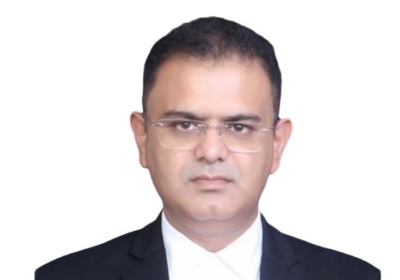
Digital Desk: The Nagpur bench of the Bombay High Court has overturned the life sentence of expelled BrahMos Aerospace scientist Nishant Agarwal, ruling that the prosecution failed to prove he meant to jeopardize national security. Agarwal stepped out of Nagpur Central Prison on Tuesday after the ruling.
Between 2014 and 2018, Agarwal was a part of the core BrahMos team, where he oversaw the delivery of 70 to 80 supersonic cruise missiles to the Armed Forces as well as top-secret programs. He was presented with the Young Scientist Award for 2017-2018.
Nishant was accused of keeping 19 sensitive files linked to BrahMos missiles on his personal laptop, conversing with a Pakistani-operated phoney LinkedIn account under the name "Sejal Kapoor," and having malware on his computer. He filed an appeal last year after being convicted and sentenced to life in prison under Section 66F of the Information Technology Act by the Nagpur Sessions Court.
Previously, the High Court declined to suspend Agarwal's sentence, citing the critical ramifications for national security. Justices A.S. Kilor and P.S. Patil reserved judgment for April 24, 2025, and issued a detailed order on December 1. The court decided that the prosecution failed to prove Agarwal's purpose to leak sensitive material, citing a lack of evidence linking his activities of copying files between July 1, 2013 and December 30, 2013, to a plan to transmit them to "Sejal Kapoor" in 2018.
The bench decided that Section 66F(1)(A)(ii) of the IT Act is only applicable when unlawful access is intended to impair India's unity, integrity, security, or sovereignty, which investigators failed to demonstrate during the file copying.
The court accepted witness testimony demonstrating Agarwal's great track record in missile deliveries and noted that his official computer contained more sensitive information than his personal laptop. In addition, the court examined Agarwal's online talks about abroad job chances, particularly in the United Kingdom, and found no evidence of ill intent.
Finally, the High Court concluded that only Section 5(1)(d) of the Official Secrets Act, which deals with the failure to take due care of secret material, was applicable, with a maximum sentence of three years. As a result, the court dismissed the remaining charges and the life sentence given by the sessions court, allowing Agarwal to be released from prison.